

















Prostate cancer is one of the most common cancers in men. When diagnosed, exploring all treatment options is crucial to making an informed decision about your health.
Focal Laser Ablation (FLA) is an alternative prostate disease treatment to active surveillance and radical therapies that maintains patients’ quality of life.
Focal Laser Ablation (FLA) for prostate cancer is a minimally invasive treatment that uses precise laser technology to target and destroy cancerous prostate tissue. Guided by advanced imaging such as MRI and ultrasound, FLA accurately pinpoints the lesion and delivers focused heat directly to it. Unlike more aggressive treatments that apply high energy or reset the entire gland—often removing excess tissue—FLA minimizes trauma to surrounding organs like the urethra and bladder neck and sphincter, reducing the risk of complications, which are common with radical treatment options.[1]
The best outcomes for focal laser ablation are generally seen in men with localized low to intermediate prostate cancer, where the cancer has not spread beyond the prostate gland. According to recent studies, patients who undergo this procedure often experience[2,3]:
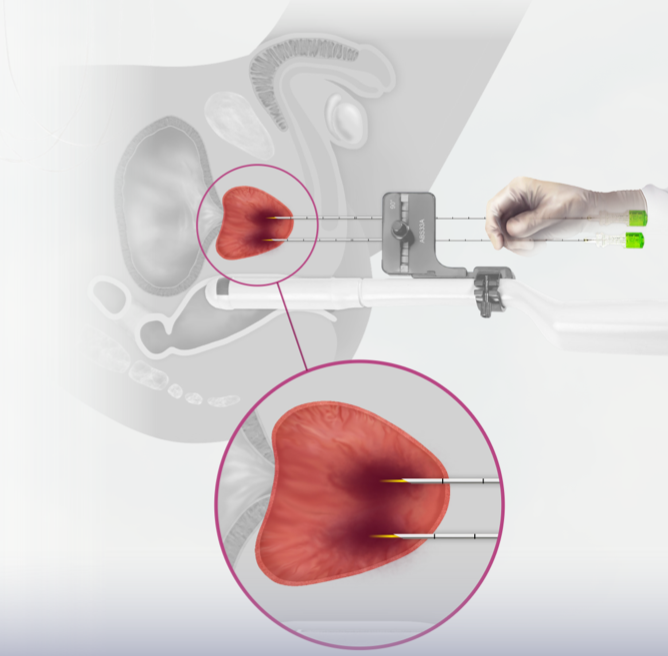
The Echolaser TPLA procedure is a Focal Laser Ablation therapy that involves the insertion of multiple ultra-thin needles through the skin in the perineal area (between the anus and scrotum), directly into the prostate. Guided by real-time ultrasound imaging, these needles precisely position tiny laser fibers within the prostate. The laser fibers then deliver targeted heat to ablate (destroy) only the affected prostate tissue, leaving surrounding healthy tissue intact.
Over time, your body naturally reabsorbs the treated tissue, which may result in a reduction in prostate size while preserving normal urinary function and quality of life[4]. The procedure is typically performed in an outpatient setting under local anesthesia, allowing you to return home the same day.