

















NanoKnife®, also called Irreversible Electroporation (IRE), is a minimally invasive focal therapy designed to target prostate cancer while preserving surrounding healthy tissue. Unlike surgery, radiation, or heat-based ablation, NanoKnife uses short electrical pulses to create tiny openings in cancer cell membranes, causing the cells to die naturally over time. Because it is non-thermal, important nearby structures such as nerves, blood vessels, and the urinary sphincter may be better protected.
Many patients choose NanoKnife because it focuses treatment only on the cancerous area of the prostate, with the goal of reducing risks of urinary incontinence and erectile dysfunction compared with whole-gland therapies.
NanoKnife does not use heat or freezing. Instead, electrical pulses disrupt cancer cell membranes while minimizing damage to nearby structures.
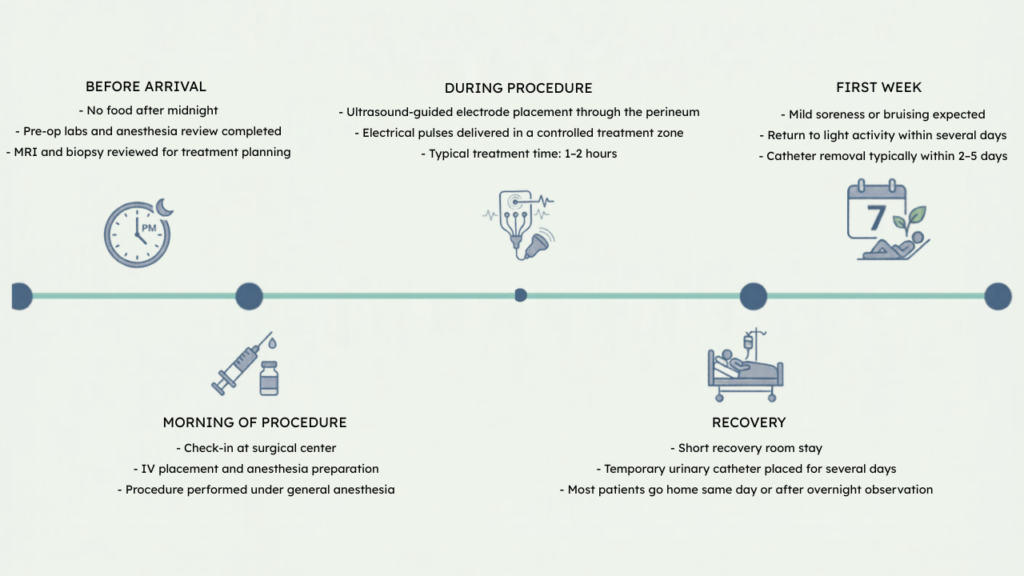
| Common Side Effect | What We Do to Reduce Risk |
|---|---|
| Temporary urinary symptoms | Careful treatment planning and short-term catheter use |
| Mild pelvic soreness/bruising | Local anesthetic, anti-inflammatory medications |
| Blood in urine or semen | Expected temporary healing response |
| Urinary retention | Routine catheter placement after procedure |
| Erectile dysfunction (less common) | Nerve-sparing focal treatment approach |
| Infection risk | Preventive antibiotics and sterile technique |
Most side effects improve over days to weeks. Because NanoKnife avoids thermal injury, surrounding nerves and blood vessels may be better preserved.
Patient reports commonly describe minimal post-procedure pain and rapid recovery, with the urinary catheter being the most common temporary inconvenience.
Careful follow-up is essential after focal therapy.
Learn whether NanoKnife / IRE may be an option for your prostate cancer treatment plan.
Schedule your consultation today to review your PSA, MRI, biopsy results, and treatment goals with our team.