Precision Treatment. Faster Recovery. Quality of Life Focused.
High-Intensity Focused Ultrasound (HIFU) is a non-invasive treatment that uses focused ultrasound energy to destroy targeted prostate tissue while minimizing damage to surrounding structures. Systems like Focal One combine MRI guidance, ultrasound imaging, and robotic precision to treat only the cancerous area of the prostate.
How HIFU Works
Simple Explanation
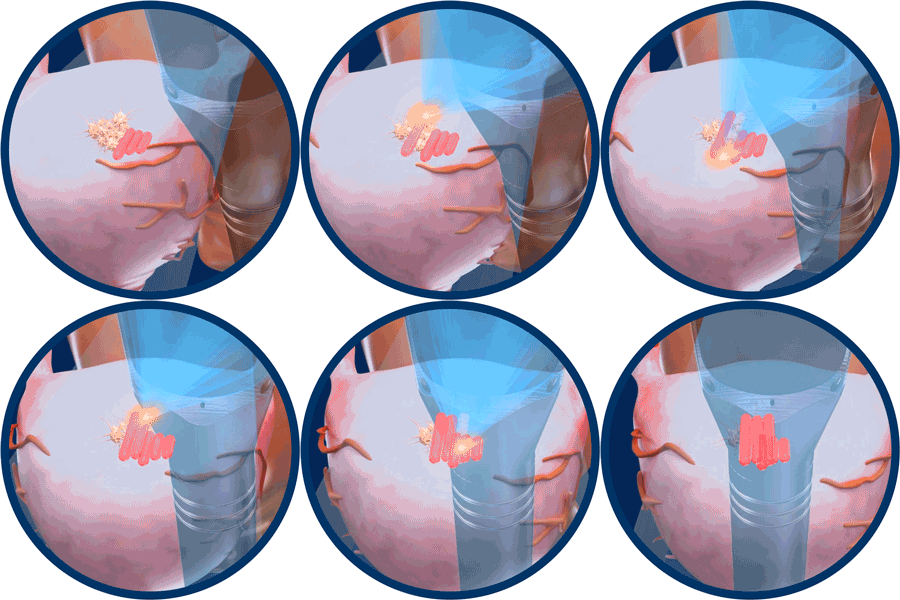
Think of HIFU like using a magnifying glass to focus sunlight onto one small point. The concentrated energy creates heat only at the targeted location, destroying abnormal tissue while sparing nearby healthy tissue.
Treatment Process
MRI and biopsy information identify the tumor location
Real-time ultrasound maps the prostate during treatment
Focused ultrasound energy heats targeted tissue to approximately 85–95°C
Cancer cells are destroyed while surrounding structures are preserved
HIFU Animation
Procedure Day Timeline
Before Procedure
Pre-operative MRI and biopsy review
Bloodwork and anesthesia evaluation
Antibiotics started if needed
Fasting after midnight
Day of Procedure
Time
What Happens
Arrival
Check-in and preparation
Anesthesia
General or spinal anesthesia
Imaging & Planning
MRI/ultrasound fusion mapping
HIFU Treatment
Targeted ultrasound ablation
Recovery
Observation and discharge
After Procedure
Most patients go home the same day
Temporary urinary catheter placed for several days
Mild urinary symptoms are common initially
Return to light activities within a few days
Common Side Effects
And How We Reduce Risk
Possible Side Effect
How We Reduce Risk
Urinary urgency/frequency
Precise focal targeting and temporary catheter use
Because HIFU treats only the diseased portion of the prostate, rates of incontinence and sexual side effects are generally lower compared with whole-gland surgery or radiation.
Follow-Up Protocol
Careful monitoring after HIFU is essential because part of the prostate remains intact.
Typical Follow-Up Schedule
Time After HIFU
Monitoring
3 Months
PSA blood test
6 Months
PSA blood test + symptom review
6–12 Months
Multiparametric MRI
12 Months
Follow-up biopsy (targeted/systematic)
Long-Term
PSA every 3–6 months
MRI and biopsy help confirm successful treatment and monitor untreated prostate tissue.
Book a Consultation
Call today to schedule your consultation Personalized prostate cancer treatment evaluation MRI-guided focal therapy expertise
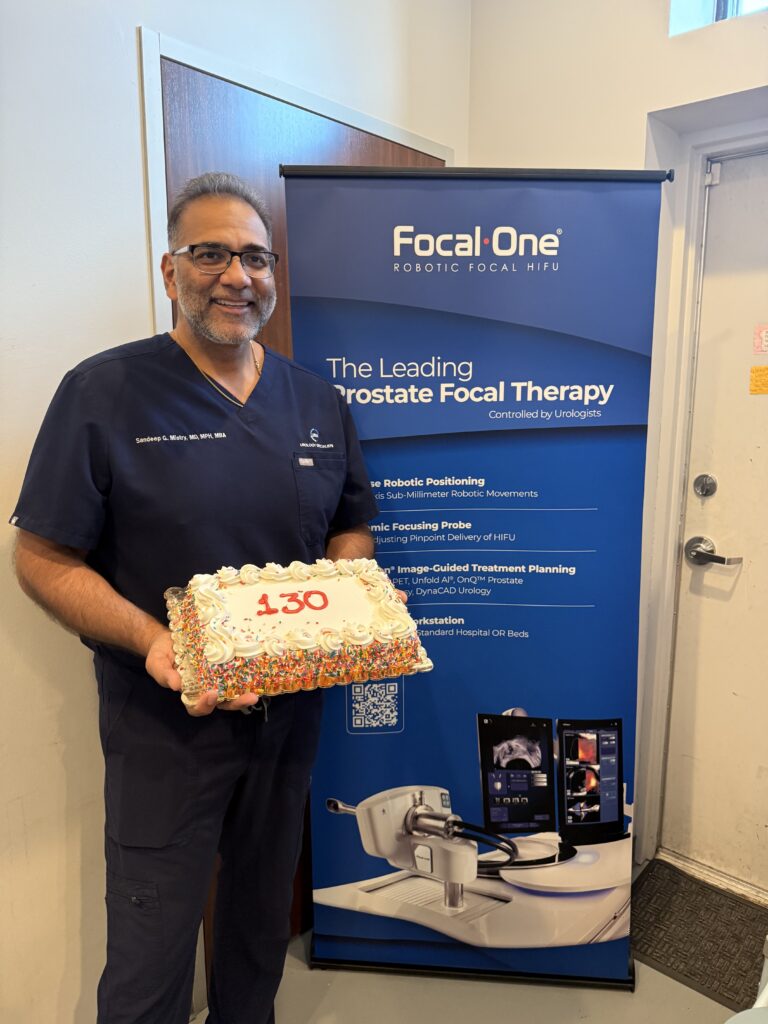
Dr. Mistry and Dr. Jacomides have attributed to over 150 HIFU’s done in the Austin area, and counting.
Frequently Asked Questions
Learn whether focal HIFU therapy may be appropriate for your prostate cancer diagnosis.
No. HIFU is a focal, non-invasive procedure that requires no incisions or radiation.
Yes. Most procedures are performed under general anesthesia.
Usually yes, for several days to reduce the risk of urinary retention during healing.
Most patients return to normal light activities within a few days.
Yes. Because it is focal and non-radiative, repeat treatment may be possible in selected patients.
Patients with localized prostate cancer visible on MRI and biopsy are often the best candidates. Final eligibility depends on tumor location, grade, prostate anatomy, and overall health.