
















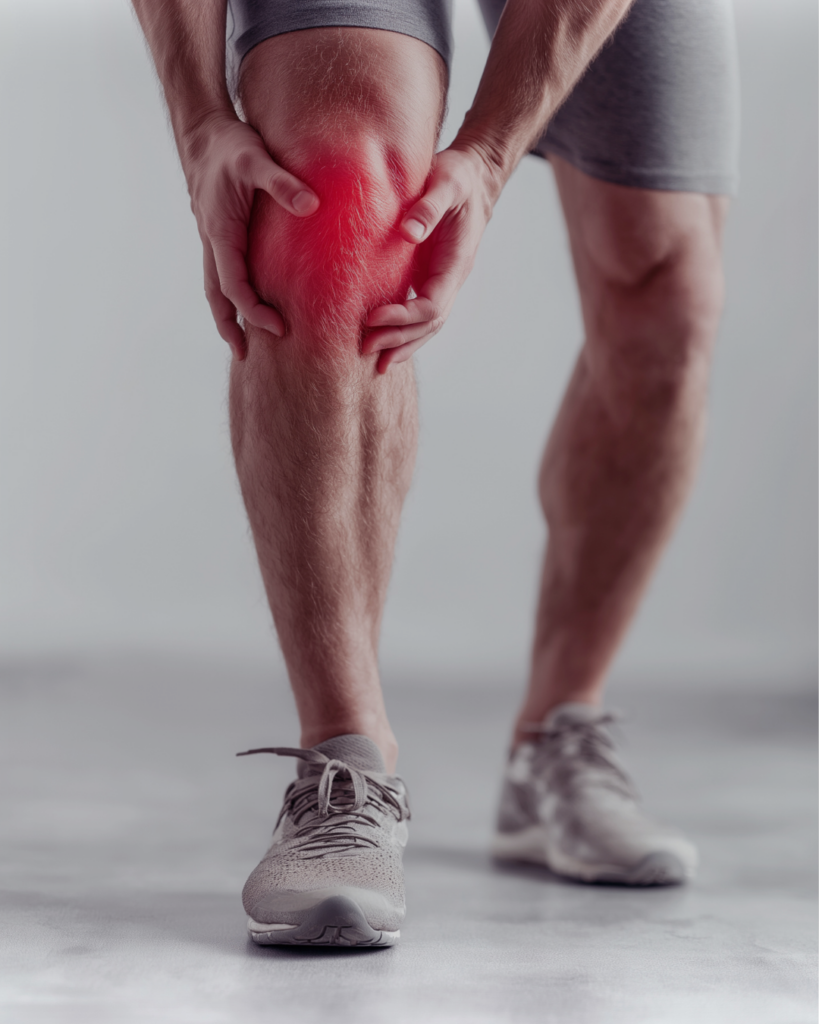
Knee pain can slowly take over your day. Stairs feel steeper, walks feel longer, and sleep becomes disrupted. For many people, knee osteoarthritis is the cause, and genicular artery embolization (GAE) is a treatment worth considering.
GAE is a minimally invasive option for people with ongoing knee pain who want to avoid or delay knee replacement. It fits between conservative care, like injections, rest, and physical therapy, and surgery.
At Urology Specialists of Austin and Summit Interventional Radiology, Dr. Preston Smith, a fellowship-trained interventional radiologist, focuses on image-guided treatments designed to reduce recovery time and help patients return to daily life more quickly.
If you’ve heard of artery embolization for an enlarged prostate, the concept may sound familiar. In the knee, however, the goal is different: to calm inflammation rather than shut down an organ.
Genicular Artery Embolization: A Beginner Guide
Genicular artery embolization is a same-day procedure used to treat knee pain from osteoarthritis. It works by reducing abnormal blood flow linked to inflammation in the joint lining.
The knee contains small vessels called genicular arteries. In arthritic knees, some of these can become overactive, contributing to swelling and pain. During GAE, tiny particles are used to reduce this excess blood flow while preserving normal circulation.
This is not knee replacement. There is no large incision and no implant.
Who May Benefit From GAE
GAE is typically considered for people who still have pain after conservative treatments. It may be a good fit for those who are not ready for surgery or are not ideal surgical candidates.
You may benefit if you:
- Have knee osteoarthritis affecting daily activities
- Had limited relief from steroid injections
- Completed physical therapy but still struggle
- Experience swelling or night pain
- Want a less invasive option before knee replacement
It often works best for people in the “middle ground”—where pain is significant but the joint is not completely worn out. Research suggests patients with mild to moderate osteoarthritis tend to respond better than those with advanced disease.
Why Reducing Blood Flow Helps
Lowering blood flow to treat pain may sound counterintuitive, but the target is inflammation.
Arthritic knees often develop abnormal small blood vessels in the joint lining. These vessels can fuel ongoing inflammation and pain. By reducing this excess flow, GAE may decrease inflammatory signals while maintaining overall knee health.
What the Procedure Is Like
GAE is an outpatient procedure. After check-in, an IV is placed and you receive sedation—similar to what is used during a colonoscopy. You are not placed on a breathing machine.
The procedure involves:
- Numbing the skin at the entry site
- Inserting a small catheter, usually through the upper thigh
- Using imaging to map blood flow to the knee
- Guiding the catheter into target arteries
- Delivering tiny embolic particles to reduce excess flow
- Confirming results with imaging
The catheter is very small—closer in size to a strand of angel hair pasta than a surgical instrument. The goal is a controlled reduction in inflammatory blood flow, not a complete blockage.
After a short recovery period, most patients go home the same day with a driver.
Recovery and Timeline
The procedure itself often takes 30 to 45 minutes, though total visit time is longer.
Recovery is typically easier than surgery. Some soreness, bruising, or fatigue is common, but there is no large incision or implant.
Relief is not always immediate. Some patients improve within weeks, while others notice gradual progress as inflammation decreases.
GAE does not rebuild cartilage, so results are best when combined with activity modification, exercise, and follow-up care.
What Do Studies Show?
Research on GAE has grown steadily over the past decade, with early studies from Japan followed by work in Korea and the United States.
Clinical studies, including those published in the Journal of Vascular and Interventional Radiology, show that many patients experience reduced pain and improved function at 12 months. Outcomes tend to be better and longer-lasting in patients with mild to moderate arthritis.
While results vary, the overall trend is encouraging, and the procedure has gained enough traction to receive Medicare coverage in certain settings.
GAE vs. Injections and Knee Replacement
Treatment options for knee arthritis exist along a spectrum.
Steroid injections may provide short-term relief, but effects often fade. Knee replacement can be highly effective for severe disease but involves major surgery and a longer recovery.
GAE fills the gap between these options. It offers a minimally invasive way to reduce pain without committing to joint replacement.
How Specialists Evaluate Candidates
Not every patient with knee pain is a good candidate for GAE. Evaluation includes symptoms, imaging, and response to prior treatments.
Signs of inflammation—such as swelling, night pain, and localized tenderness—can support the case. Imaging like X-rays or MRI helps determine the stage of arthritis.
A good consultation should clarify whether GAE matches your condition and goals.
Why Experience Matters
Although GAE is minimally invasive, it requires precision and experience.
The physician must understand detailed vascular anatomy and target the correct vessels without over- or under-treating. Outcomes depend heavily on technique.
That is why many patients seek fellowship-trained interventional radiologists with extensive catheter-based experience.
When to Seek Help
If knee pain is affecting sleep, mobility, work, or exercise, it may be time to explore additional options. You do not need to wait until the joint is severely damaged.
A consultation can help you understand where you are in the treatment spectrum and whether GAE is appropriate.
Conclusion
Genicular artery embolization offers a meaningful option for people with persistent knee arthritis pain who are not ready for surgery. It will not reverse arthritis, but it may reduce inflammation, improve function, and help you stay active with less downtime.
For the right patient, that can make a significant difference.