













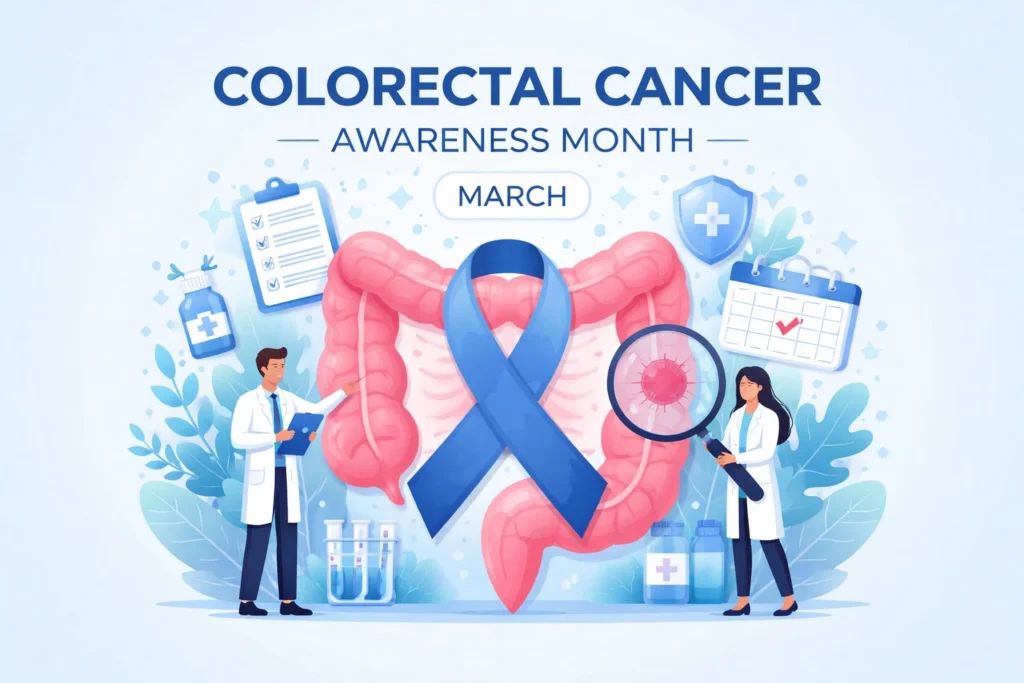
Colorectal cancer is not a topic most people bring up in everyday conversation, but it remains one of the most common cancers in the United States. The encouraging news is that regular screening can prevent many cases or detect them early, when treatment is most effective.
Each year, roughly 150,000 Americans are diagnosed with colon or rectal cancer. When the disease is identified at an early stage, the outlook improves dramatically. Stage 1 colorectal cancer has a survival rate of about 95 percent, which highlights how powerful early detection can be.
Screening plays a critical role in making that early detection possible. In fact, colorectal cancer screening is unique among cancer tests because it does more than simply identify cancer. It can actually prevent cancer from developing in the first place.
Understanding What Colorectal Cancer Screening Does
Many people assume colorectal cancer screening is only meant to find tumors. In reality, the main goal is to detect and remove polyps.
Polyps are small, abnormal growths that develop on the lining of the colon or rectum. Most polyps are harmless at first, but some can gradually transform into cancer over time. During a screening procedure, physicians look for these growths and remove them before they become dangerous.
By removing polyps early, doctors can stop cancer before it ever has the chance to form. This preventive approach is one of the most effective strategies in modern cancer care.
Advances in medical imaging have also improved the accuracy of screening procedures. High-definition cameras and modern endoscopic tools allow physicians to carefully examine the entire colon and identify even very small abnormalities.
When Screening Should Begin
Current national guidelines recommend that adults at average risk begin colorectal cancer screening at age 45. This recommendation was updated in recent years after researchers observed rising rates of colorectal cancer in younger adults.
While age 45 is the starting point for many people, some individuals may need to begin screening earlier. Those with a family history of colon cancer or colon polyps often benefit from earlier evaluation.
Certain inherited conditions can also increase risk. For example, Lynch syndrome and familial adenomatous polyposis are genetic disorders associated with a higher likelihood of colorectal cancer. Individuals with these conditions typically require earlier and more frequent monitoring.
Discussing your personal and family medical history with your physician can help determine the best screening schedule for you.
Colonoscopy: The Gold Standard
Among the available screening methods, colonoscopy remains the most comprehensive test.
A colonoscopy allows physicians to examine the entire colon using a thin, flexible tube equipped with a camera. During the procedure, doctors can identify polyps and remove them immediately. This combination of detection and treatment makes colonoscopy especially effective.
Preparation for a colonoscopy involves cleansing the digestive tract so the colon can be clearly visualized. While the preparation process can be inconvenient, it is temporary and essential for obtaining accurate results.
The procedure itself is generally comfortable. Patients receive sedation and typically sleep through the exam. A colonoscopy usually takes about 30 to 45 minutes, and most people return to normal activities the following day.
How Often Screening Is Needed
If a colonoscopy shows no abnormalities, most patients do not need another exam for ten years. This long interval is possible because polyps typically grow slowly.
However, if polyps are found and removed, your physician may recommend more frequent follow-up examinations. The timing depends on the number, size, and type of polyps detected.
Your doctor will review the pathology results and determine the most appropriate screening schedule moving forward.
Alternative Screening Options
Although colonoscopy is considered the most thorough screening method, several alternatives are available for patients who prefer non-invasive options or cannot undergo the procedure.
Stool-based tests are commonly used for colorectal cancer screening. These tests analyze a small stool sample for signs of hidden blood or abnormal DNA markers that may indicate cancer or precancerous growths.
One widely used option is the fecal immunochemical test, commonly called the FIT test. This test looks for small amounts of blood in the stool that may not be visible to the naked eye. Because it only detects active bleeding, it typically needs to be repeated every year.
Another option is a stool DNA test, which checks for genetic markers associated with colorectal cancer in addition to hidden blood. These tests can often be completed at home and mailed to a laboratory for analysis.
While stool tests are convenient, it is important to understand their limitations. If any abnormal results appear, a follow-up colonoscopy is usually required to confirm the findings and remove any polyps.
Imaging-Based Screening
Some patients may choose imaging-based screening instead of traditional endoscopy. One example is CT colonography, sometimes referred to as a virtual colonoscopy.
This imaging test uses specialized CT scans to create detailed pictures of the colon. Physicians review these images to identify suspicious growths or abnormalities.
Another procedure, flexible sigmoidoscopy, allows doctors to examine the lower portion of the colon. Although it does not evaluate the entire colon, it can still detect many polyps and cancers in that region.
These options may be appropriate for certain patients, but they do not allow doctors to remove polyps during the same procedure. If abnormalities are detected, a standard colonoscopy will still be necessary.
Emerging Blood Tests
Researchers are currently developing blood tests designed to detect colorectal cancer through circulating DNA markers. These tests aim to identify cancer-related genetic changes from a simple blood sample.
While this technology is promising, most current blood tests are better at identifying existing cancers than detecting early precancerous polyps. Because of this limitation, colonoscopy remains the most effective screening method for prevention.
Ongoing clinical research continues to improve these tests, and they may play a larger role in screening strategies in the future.
Lifestyle Factors That Influence Risk
Screening is an essential part of colorectal cancer prevention, but lifestyle choices also influence long-term risk.
Regular physical activity is associated with lower rates of colorectal cancer. Even moderate exercise, such as walking for 30 minutes a day, can support digestive health.
Diet also plays a role. Eating a diet rich in vegetables, fruits, and whole grains provides fiber and nutrients that support the digestive system. Limiting processed foods and excessive red meat may further reduce risk.
Maintaining a healthy weight, avoiding tobacco, and limiting alcohol consumption can also contribute to better overall health and reduced cancer risk.
What to Expect During Screening
For many people, the anticipation of a screening procedure can cause anxiety. Understanding what to expect can make the process much easier.
The preparation stage typically occurs the day before a colonoscopy and involves drinking a cleansing solution to empty the colon. Although this step requires frequent trips to the restroom, it ensures that the physician can clearly visualize the colon.
On the day of the procedure, patients receive intravenous sedation to help them relax. Most people sleep through the exam and remember very little afterward.
Following the procedure, patients spend a short period recovering from sedation before returning home. Because sedation can temporarily affect reflexes, a friend or family member must provide transportation.
Understanding Your Results
After the procedure, physicians usually review the initial findings with the patient. If no abnormalities are found, the next screening may not be necessary for many years.
If polyps are removed, they are sent to a laboratory for further analysis. Pathologists evaluate the cells to determine whether the polyp showed precancerous changes.
These results help physicians decide when the next screening should occur and whether any additional monitoring is needed.
The Importance of Screening
Colorectal cancer screening is one of the most effective tools in preventive medicine. By identifying and removing polyps early, physicians can prevent many cancers from ever developing.
Beginning screening at the recommended age and staying on schedule can significantly reduce the risk of advanced disease.
For many patients, the most difficult part of screening is simply making the appointment. Taking that step can make a meaningful difference in long-term health and peace of mind.
If you are approaching the recommended screening age or have concerns about your risk factors, speaking with your physician is the best place to start. Regular screening remains one of the most powerful ways to protect your health and detect colorectal cancer early, when treatment is most successful.